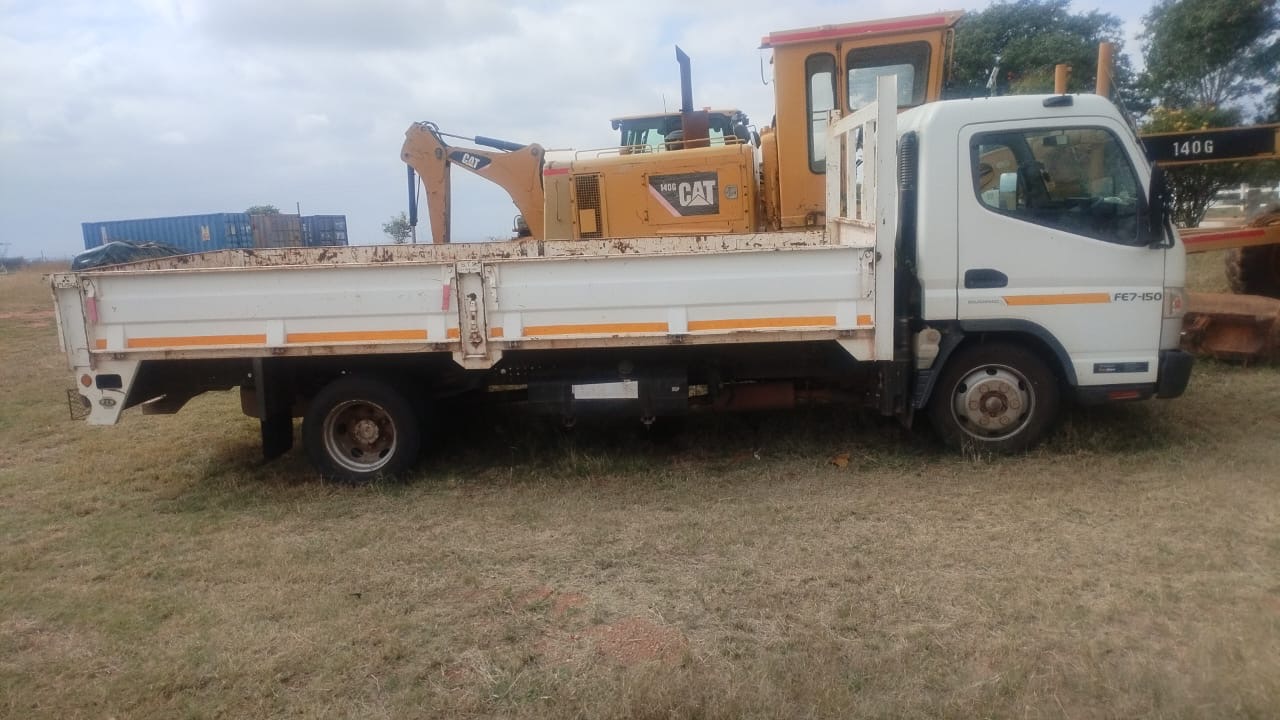
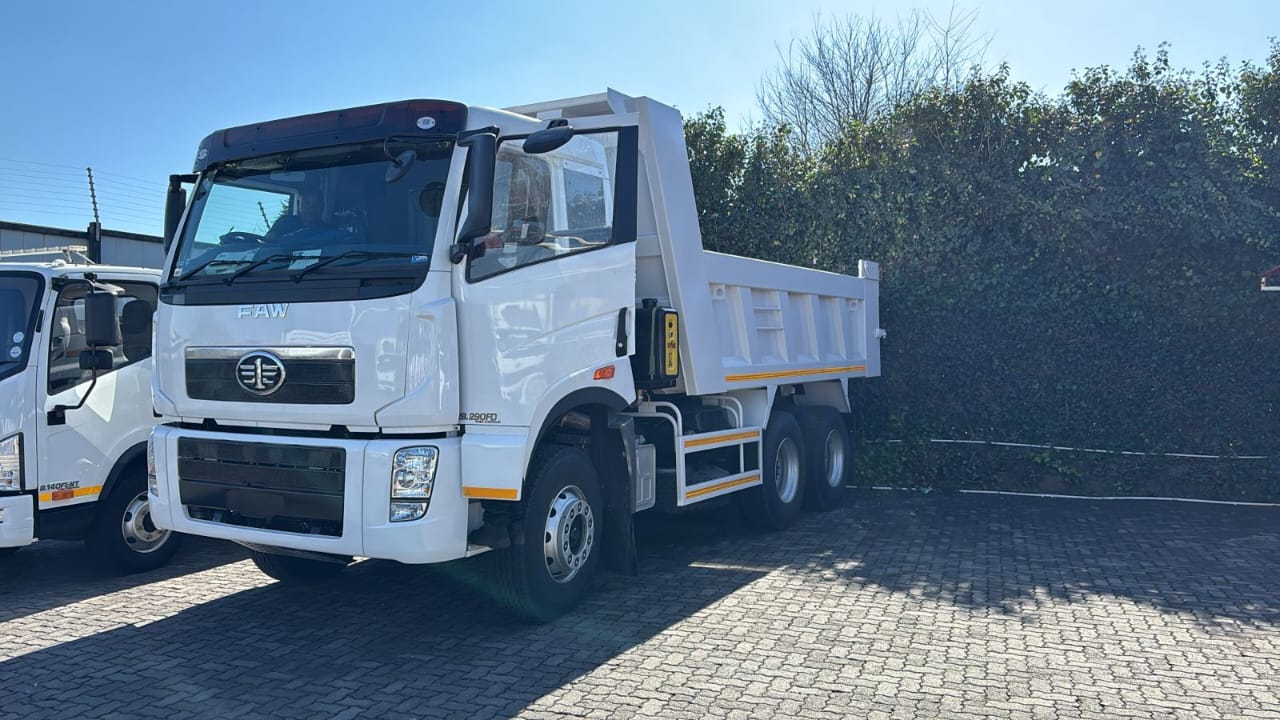
Crane Truck Hire in Gauteng — 4-5 Ton, 8-10 Ton & 34 Ton Hiab with Operator
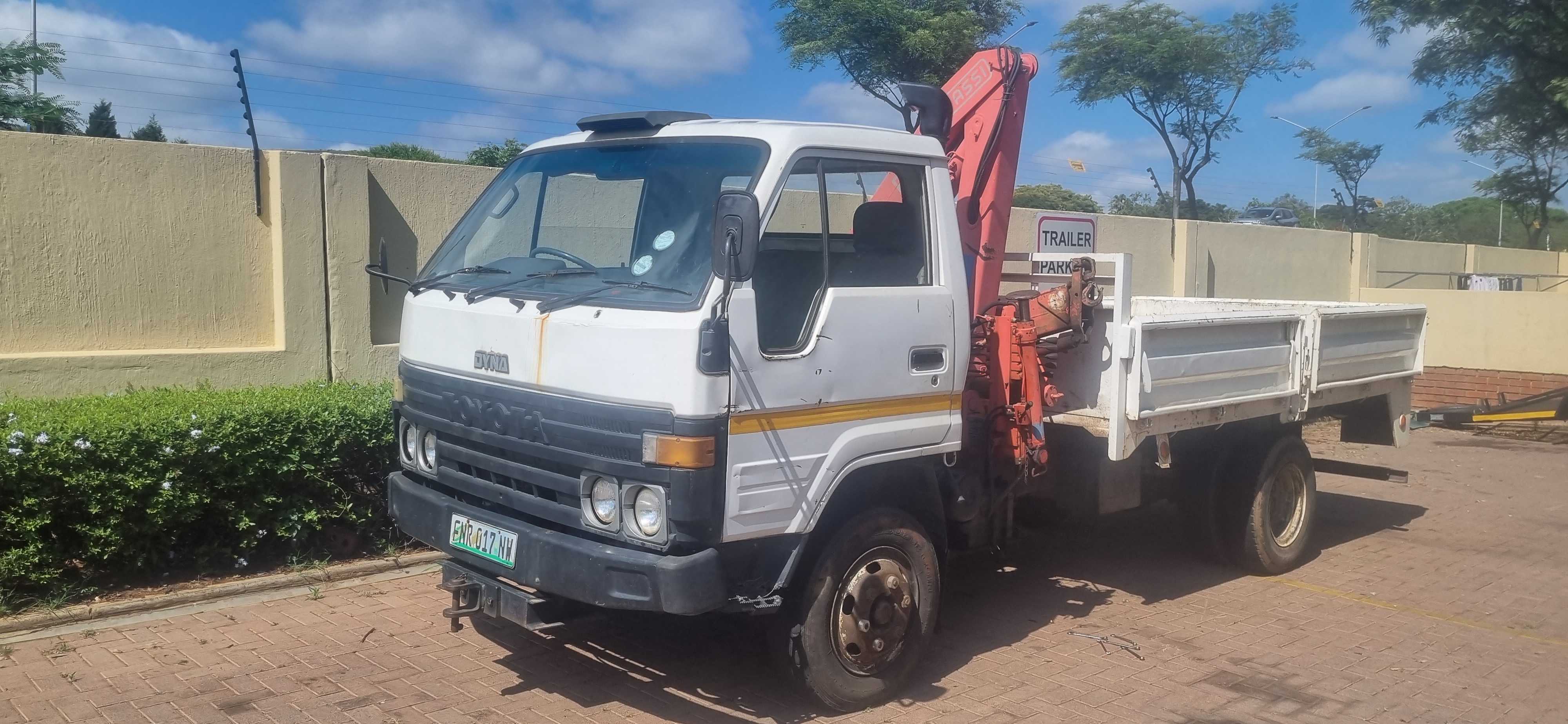
Verified transporter: crane truck hire in Gauteng, Johannesburg . Available for hourly, daily, weekly, monthly, long-distance and off-road lifts.
Quick answer
A crane truck (also called a Hiab, knuckle-boom truck, or boom truck) is a flatdeck truck with a hydraulic crane mounted between the cab and the load body. It loads, transports and offloads its own cargo — no forklift or mobile crane is needed at either end. In Gauteng you can hire a crane truck in three weight classes: 4–5 ton (light lifts up to ~2 tonnes), 8–10 ton (lifts 3–5 tonnes), and 34 ton (heavy lifts 8–15 tonnes). Prices start from R960.00 per day or R16.00 per km — driver and certified crane operator included.
Why a Crane Truck Is the Ultimate Self-Loading Delivery Vehicle
Standard trucks do one job: they carry the load from A to B. But the load has to be placed on the truck at A, and taken off the truck at B — usually by a forklift or a mobile crane, which may or may not be available at either end. The crane truck solves that problem entirely. It carries its own crane on board, so it can pick up the load at the pickup point, drive it to the delivery point, and set it down precisely where it needs to be — no external equipment required at either end.
That self-loading capability is not just a convenience — it changes what is possible. A crane truck can deliver a shipping container to a site with no forklift. It can lift a transformer over a boundary wall into a substation. It can place a steel beam directly onto a rooftop without a separate crane. It can offload palletised bricks into a trench. It can set a generator down beside a telecoms tower in a remote area. That is why the crane truck is the standard configuration for steel erection, container delivery, transformer installation, mining supply, telecoms deployment, and any other job where heavy, awkward, or oversized cargo must be both transported and precisely placed. It is one truck doing the work of two — and that is the entire point.
At a Glance — Crane Truck Specifications by Size
| Available sizes | 4–5 ton rigid · 8–10 ton rigid · 34 ton articulated |
|---|---|
| Crane type | Knuckle-boom (Hiab) · Telescopic boom · Rear-mounted or mid-mounted |
| Lift capacity range | 1 tonne (light 4–5 ton) to 15 tonnes (34 ton rig) |
| Maximum lift height | 6 – 8 m (4–5 ton) · 8 – 12 m (8–10 ton) · 12 – 20+ m (34 ton) |
| Working radius | Up to 15 m at reduced capacity depending on crane model |
| Payload capacity | 4,000 kg to 34,000 kg (payload plus crane weight combined) |
| Deck length | 4.5 m (4–5 ton) · 6 – 7.5 m (8–10 ton) · 12 – 13.5 m (34 ton) |
| Safety system | Load moment limiter (LML) — certified and current on every unit |
| Operator | Certified crane operator supplied with every booking |
| Licence (light crane truck) | Code 10 (C1) for 4–5 ton |
| Licence (heavy crane truck) | Code EC + PrDP for 8–10 ton and 34 ton |
| Service area | Gauteng, Johannesburg , nationwide and Southern Africa cross-border |
Choose Your Crane Truck Size
Crane trucks come in every commercial weight class, from a light 4–5 ton rigid up to a 34 ton articulated rig with a heavy-lift crane. The right choice depends on the load weight, the required lift height, the working radius, and the physical constraints of the pickup and delivery points. Here are the three crane truck sizes most requested in Gauteng.
4–5 Ton Crane Truck Hire
Lift ~2 tonnesReach 6-8 mCode 10 licenceThe 4–5 ton crane truck is the entry-level self-loading vehicle. It carries 4,000 to 5,000 kg of payload and has a light knuckle-boom crane mounted behind the cab, typically with a lift capacity of around 1.5 to 2 tonnes close to the truck. It is the ideal size for delivering palletised goods, small containers (6 m / 20 ft), building materials in bulk bags, garden equipment, generators, and any load that needs a small crane lift at the delivery point but does not justify a full mobile crane. Compact and manoeuvrable — it fits into residential streets and tight loading bays that a larger crane truck cannot reach.
Best for: palletised goods, small containers (20 ft), building materials in bulk bags or on pallets, small generators, garden equipment, light steel, and any delivery where the consignee does not have a forklift.
Typical industries: building supply, hardware, landscaping, small-scale construction, agricultural supply, small courier and distribution, and light industrial.
Why customers choose it: the lowest-cost self-loading option. Where a normal 4 ton flatdeck truck would need a forklift at each end, the crane truck does it all — faster, cheaper, and with less coordination than booking separate equipment.
8–10 Ton Crane Truck Hire
Lift 3-5 tonnesReach 8-12 mCode EC licenceThe 8–10 ton crane truck is the workhorse of the crane truck fleet. It carries 8,000 to 10,000 kg of payload and has a mid-size knuckle-boom crane mounted between the cab and the load body, typically with a lift capacity of 3 to 5 tonnes close to the truck. The deck length of 6 to 7.5 m allows it to carry long items — steel beams, pipes, precast concrete elements — and its crane can reach over boundary walls and into construction sites. This is the standard configuration for steel merchants, precast concrete suppliers, mining supply companies, and infrastructure contractors across South Africa.
Best for: structural steel (beams, columns, sections), precast concrete elements (beams, columns, slabs, pipes), 20 ft containers, generators and transformers, industrial machinery, mining components, telecoms and utility poles, and 8–10 tonnes of palletised goods.
Typical industries: steel merchants, precast concrete, construction, mining supply, infrastructure and civil engineering, telecoms deployment, and industrial supply.
Why customers choose it: the sweet spot for self-loading commercial deliveries. Handles the heavy, awkward loads that a 4–5 ton crane truck cannot take, at a fraction of the cost of a 34 ton rig plus a separate mobile crane.
34 Ton Crane Truck Hire
Lift 8-15 tonnesReach 12-20+ mHeavy liftThe 34 ton crane truck is the heavyweight of the self-loading fleet. It is typically an articulated rig — truck-tractor with a semi-trailer — with a heavy-lift knuckle-boom or telescopic crane mounted on the trailer or on a specialist subframe behind the cab. Lift capacity typically runs 8 to 15 tonnes close to the truck, with a maximum reach of 12 to 20+ m depending on the boom configuration. This is the configuration used for the most demanding lifts: full 12 m (40 ft) container placement, transformer installation, crusher and mill liner replacement, large generator placement, and infrastructure projects where both the transport and the lift are heavy.
Best for: full 12 m (40 ft) containers, transformers, heavy generators, crusher and mill components, mining plant, large precast elements, telecoms towers, and any lift where the load weight and the working radius exceed the capacity of an 8–10 ton crane truck.
Typical industries: electrical utility and Eskom contracting, mining, heavy industry, container terminals and depots, port operations, telecoms infrastructure, and large-scale construction.
Why customers choose it: the heaviest self-loading configuration available without bringing in a mobile crane. Where a mobile crane would need a permit, a route survey, and separate transport for the load, the 34 ton crane truck does the entire job in one vehicle — a massive time and cost saving on heavy-lift jobs.
Crane Truck vs Flatdeck vs Mobile Crane — Side by Side
| Feature | Crane Truck (Hiab) | Flatdeck Truck | Mobile Crane |
|---|---|---|---|
| Self-loading | Yes — mounted crane on the truck | No — needs forklift or crane at each end | No — the crane is a separate vehicle |
| Transports the load | Yes — carries the cargo on the same vehicle | Yes — carries the cargo | No — crane only; truck still needed for cargo |
| Lift capacity | 1 – 15 tonnes | N/A (no lifting) | 20 – 300+ tonnes |
| Setup time | 5 – 10 minutes | N/A (depends on forklift availability) | 30 – 90 minutes (rigging, outriggers) |
| Permits required | Rarely (only for over-dimensional or road closures) | Rarely | Often (road closures, route surveys) |
| Best for | Routine self-loading deliveries | Bulk dry cargo | One-off heavy lifts |
| Cost per job | Low — one vehicle for transport + lift | Low — transport only | High — mobilisation + rigging + separate transport |
Not sure whether a crane truck or a mobile crane is right for your lift? Send us the load weight, lift height, and working radius on WhatsApp and we will recommend the correct approach — free of charge.
What Can a Crane Truck Lift? Real-World Load Guide by Industry
Crane trucks handle a wide range of heavy, awkward, or oversized loads. The lift capacity depends on the crane size and the working radius — the further the boom reaches, the less it can lift. Here are approximate capabilities by crane truck size:
| Load type | 4–5 ton truck | 8–10 ton truck | 34 ton truck |
|---|---|---|---|
| 6 m (20 ft) shipping container | Empty (up to ~2 t) | Yes (loaded, up to ~5 t) | Yes |
| 12 m (40 ft) shipping container | No | Empty only (if crane reach permits) | Yes (loaded, up to ~10 t) |
| Structural steel beams | Light sections | Standard I-beams and H-columns | Heavy sections and plate |
| Precast concrete elements | Small slabs and kerbs | Beams, columns, larger slabs | Heavy beams and precast sections |
| Transformers | Small distribution units | Mid-size pad-mount and ground-mount | Large substation and power transformers |
| Generators | Small portable units | Mid-size standby generators | Large industrial and data-centre generators |
| Industrial machinery | Small pumps and motors | Mid-size machinery and plant | Heavy mining and industrial equipment |
| Telecoms and utility poles | Small poles and equipment | Standard distribution poles | High-voltage transmission structures |
| Palletised goods in bulk bags | Yes (~10 bags) | Yes (~20–25 bags) | Yes (bulk volume) |
Load weight and working radius together determine the correct crane size. Two loads of the same weight may need different cranes if one has to be placed at 4 m and the other at 12 m. Tell us the load weight, the lift height, and the horizontal working radius at quote stage so we allocate the correct crane and confirm the lift plan.
Crane Truck Hire Prices in Gauteng
Crane truck hire is priced higher than standard dry-freight hire because of the crane unit's capital cost, the certified operator, and the load-testing and LML certification compliance. The two standard options below cover the vast majority of bookings.
Option 1 — Truck + Crane Only
Self-drive with our operator
R 960.00 / Day
R 16.00 / km
Truck, crane and certified operator. Fuel, tolls and driver excluded. Licence requirements vary by size.
Enquire NowOption 2 — Full Service
Truck + crane + driver + operator Best value
R 1,120.00 / Day
R 17.60 / km
Driver, certified crane operator, insurance and GIT cover included.
Chat on WhatsAppWhat Affects the Cost of Crane Truck Hire?
- Crane truck size: the biggest single factor. A 4–5 ton crane truck costs a fraction of a 34 ton rig with a heavy-lift crane, and pricing scales with payload, crane capacity, and boom reach.
- Crane capacity and boom length: a crane truck with a larger crane and longer boom costs more to hire, because the capital value and running cost are higher. Reach matters as much as weight.
- Distance: the per-kilometre rate drives your final price. Local trips within Gauteng are charged differently to interprovincial and cross-border runs.
- Driver and operator: every crane truck booking includes a certified crane operator. For simple lifts, the driver is the operator. For complex lifts, a dedicated operator alongside the driver is quoted separately.
- Lift complexity: routine lifts (load, drive, set down) are quoted on the standard rate. Complex lifts involving specific hazards — overhead power lines, off-road ground, confined spaces, live infrastructure, or high-lift conditions — require a lift plan and are quoted per job.
- Permits and lift plans: standard jobs require none. Over-dimensional loads, road closures, lifts over public roads, and lifts on mine or quarry sites may require permits, method statements, and route surveys — quoted separately.
- Standby time: waiting time at the loading or delivery point beyond the agreed free period is charged hourly.
- Duration: weekly, monthly and long-term contracts attract significant discounts over daily rates.
Industries We Serve with Crane Trucks in Gauteng
- Steel merchants: delivery of structural steel, beams, columns, and sections directly to construction sites, with the crane lifting the load off and placing it.
- Precast concrete: delivery and installation of precast beams, columns, slabs, wall panels, and pipes.
- Container logistics: self-loading delivery of 6 m and 12 m shipping containers to sites without forklifts or reach-stackers.
- Electrical utilities & Eskom contracting: delivery and placement of transformers, switchgear, and substation equipment.
- Mining supply: delivery of crusher parts, conveyor sections, mill liners, and heavy mining components.
- Telecoms infrastructure: delivery and placement of poles, tower sections, and site equipment.
- Building supply: self-loading delivery of palletised bricks, blocks, cement, and bulk bags to sites without forklifts.
- Construction & civil engineering: self-loading delivery and placement of material on tight or remote sites.
- Generators & standby power: delivery and installation of standby generators at data centres, hospitals, and commercial premises.
- Agriculture: delivery of feed, fertiliser, seed, and equipment to farms without handling facilities.
- Event staging: delivery and placement of staging, trussing, and heavy exhibition equipment.
Off-Road and Remote-Site Crane Truck Work
Crane trucks are frequently used on sites with limited access and no handling infrastructure. Common off-road and remote-site jobs include:
- Mine and quarry work: delivering crusher components, mill liners, and conveyor sections to mine benches and plant areas.
- Farm deliveries: offloading seed, fertiliser, and equipment in paddocks without forklifts.
- Telecoms tower sites: delivering and placing tower sections, antennas, and base station equipment on remote ridges.
- Rural electrification: delivering and placing transformers, poles, and switchgear at rural substations.
- Remote construction: delivering material to construction sites on gravel or dirt access roads.
- Flood and disaster relief: delivering and placing emergency equipment where normal logistics are disrupted.
Off-road work requires confirming ground conditions before departure — a crane truck working on soft or unstable ground risks tipping, even within its nominal load chart. Tell us the ground conditions and access route at booking so we allocate the correct vehicle and confirm the lift plan.
Cross-Border Crane Truck Hire
We arrange cross-border crane truck hire across Southern Africa, with experienced drivers and full documentation support. Common corridors from Gauteng include:
- Namibia: via Nakop / Ariamsvlei on the N14 — Windhoek, Walvis Bay, Swakopmund.
- Botswana: via Skilpadshek / Pioneer Gate on the N4 — Gaborone, Francistown, Maun.
- Zimbabwe: via Beitbridge on the N1 — Harare, Bulawayo, Victoria Falls.
- Zambia: via Beitbridge and Chirundu / Kazungula — Lusaka, Ndola, Livingstone.
- Mozambique: via Komatipoort on the N4 / Maputo corridor — Maputo, Beira, Nacala.
- Malawi and DRC: on request, quoted per trip and cargo.
Cross-border crane truck work typically requires 48 hours' notice for customs documentation, cross-border permits, and where relevant, lift-plan confirmation. Contact us on WhatsApp on +27 62 345 2345 for a corridor-specific crane truck quote.
How to Book a Crane Truck in Gauteng
- Tell us what you are lifting. Enter your load type, weight, required lift height, working radius, pickup point, and drop-off point in the free estimate form on this page.
- Get an instant distance and fare. Our system calculates the road distance and your estimated fare immediately — no waiting for a callback.
- Choose your crane truck size. 4–5 ton, 8–10 ton, or 34 ton; knuckle-boom or telescopic; standard or specialised subframe.
- Confirm your booking. Submit the form or message us on WhatsApp. You will receive written confirmation with the vehicle, driver and operator details, current LML certificate, and final price.
- Complex lifts: we will prepare a lift plan and method statement on request for lifts involving specific hazards (high reach, off-road ground, live infrastructure, confined spaces).
- Cross-border trips: we will confirm documentation, customs, and lift-plan requirements before departure.
Why Choose WeTransport for Crane Truck Hire
Verified & Fully Insured
Every crane truck is licensed, roadworthy, and covered by comprehensive insurance plus goods-in-transit cover.
Certified Operators & Current LML
Every lift is performed by a certified crane operator. Load moment limiter certificates are current and provided with every booking.
Lift Plans on Request
Lift plans and method statements prepared for complex lifts involving high reach, off-road ground, live infrastructure, or confined spaces.
Experienced Drivers & Operators
Code 10 and Code EC drivers with crane operator certification, experienced on construction sites, mines, and remote infrastructure deployments.
Transparent Pricing
Clear per-day and per-kilometre rates quoted up front. No hidden call-out fees or surprise surcharges.
Crane Truck Hire in Johannesburg and Nearby Areas
We arrange crane truck hire throughout Gauteng and the greater Johannesburg region, including local deliveries, regional routes, interprovincial long-haul, and remote-site work. Popular crane truck routes from Gauteng include runs to Johannesburg, Pretoria, Durban, Cape Town, Bloemfontein, Polokwane, Nelspruit, East London, Rustenburg, Witbank, Richards Bay, and cross-border to Gaborone, Windhoek, Harare, Lusaka, and Maputo.
Insurance, Tracking & Compliance
- Insurance: Yes Active
- Live tracking: Live GPS tracking available
- Goods in transit: Yes Active
- Driver compliance: valid licence for the crane truck class (Code 10 or Code EC), valid PrDP where required, and medical fitness certificate
- Operator compliance: certified crane operator with current certification for the specific crane unit
- Crane compliance: current load-test certificate, load moment limiter (LML) certification, and hydraulic system inspection
- Vehicle compliance: current licence disc, roadworthy certificate, operator card, calibrated tachograph where required
- Overload compliance: loads verified against axle and GCM limits before departure, and lifts verified against the crane load chart at the working radius
- Abnormal load compliance: route surveys, permits, and escorts arranged for over-dimensional or over-mass cargo
- Cross-border compliance: customs documentation, cross-border permits, and country-specific GIT confirmation arranged per corridor